A collection of images from a recent visit to Titanic: The Artifact Exhibition in Orlando, Florida.
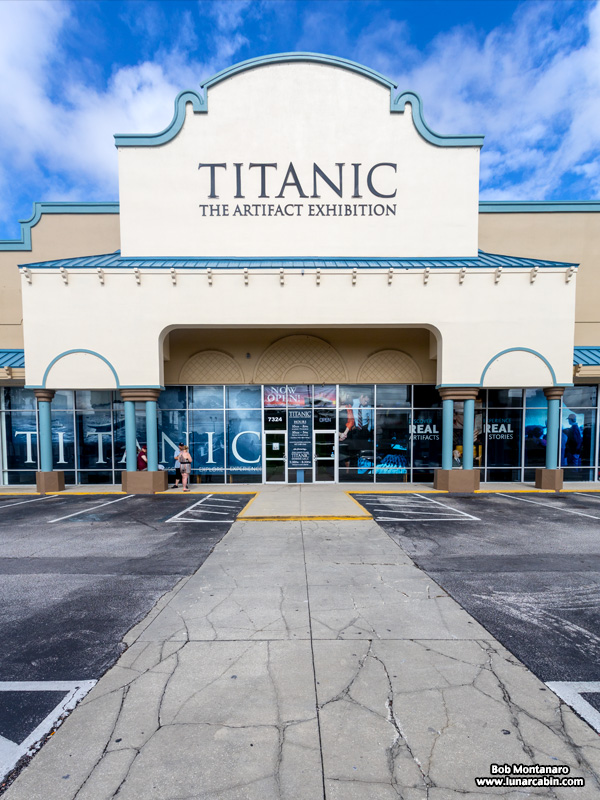
With over 300 artifacts brought up from the RMS [Royal Mail Steamer] Titanic wreck, the displays are laid out in recreations of various rooms aboard the massive ship that gives a feel of touring the opulent ocean liner. A well thought out part of the exhibit is the air itself, which grows increasingly colder until it is almost freezing toward the end as a small reminder of what the conditions were like for the passengers braving the North Atlantic after the Titanic struck the iceberg.
Lighting is fairly museum standard with many displays softly lit in various ways making photography a bit problematic. At least photography is allowed but, of course, no flash photography is allowed.

A model of the White Star Liner Titanic. The actual ship was 882.5 feet long with the height of an 18-story building measured from the bottom of the keel to the top of the funnels. The rearmost funnel was added for aesthetic purposes with the dual purpose of providing ventilation to the engine spaces below. With a full complement, the Titanic could carry 2,435 passengers and approximately 900 crew members. On its maiden journey in April 2012, the ship carried 2,208 passengers and crew. Only 712 were rescued with 1,496 killed mainly due to a lack of lifeboats to carry off everyone aboard.
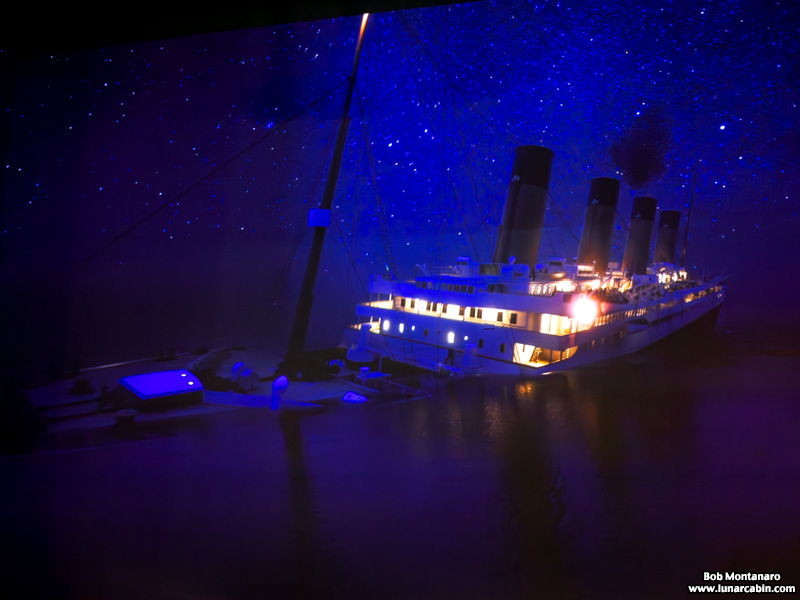
A theater with a 180-degree projection provides a CGI-rendered tour of the ship ending with the “unsinkable” ship striking the iceberg and sinking. The amazingly calm sea and starlit sky reported by the survivors is well rendered as seen here with the ship slowly sinking bow first.
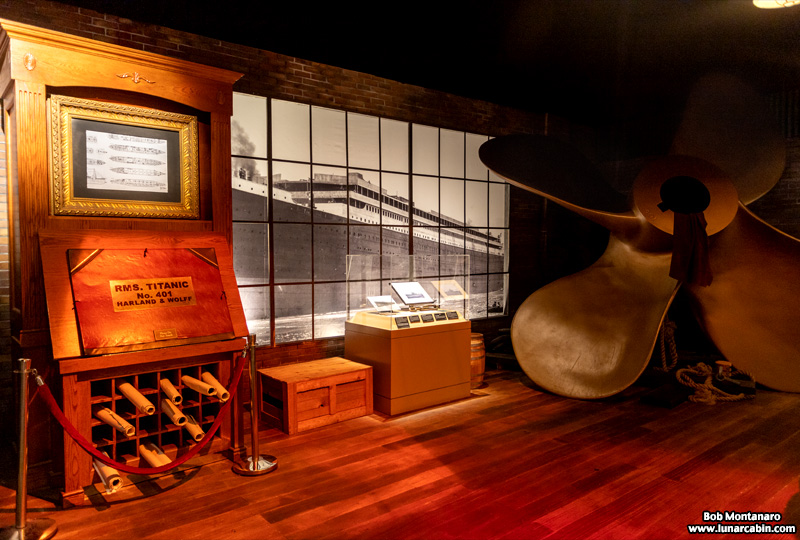
The Titanic was built at the Harland & Wolff shipyards in Belfast, Northern Ireland.
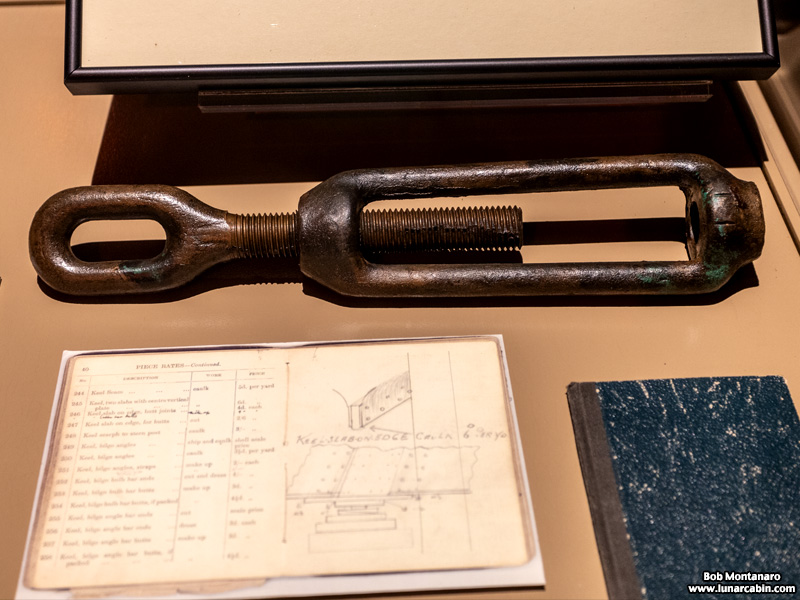
A lifeboat turnbuckle retrieved from the wreck used to secure a lifeboat to the Boat Deck when not in use.
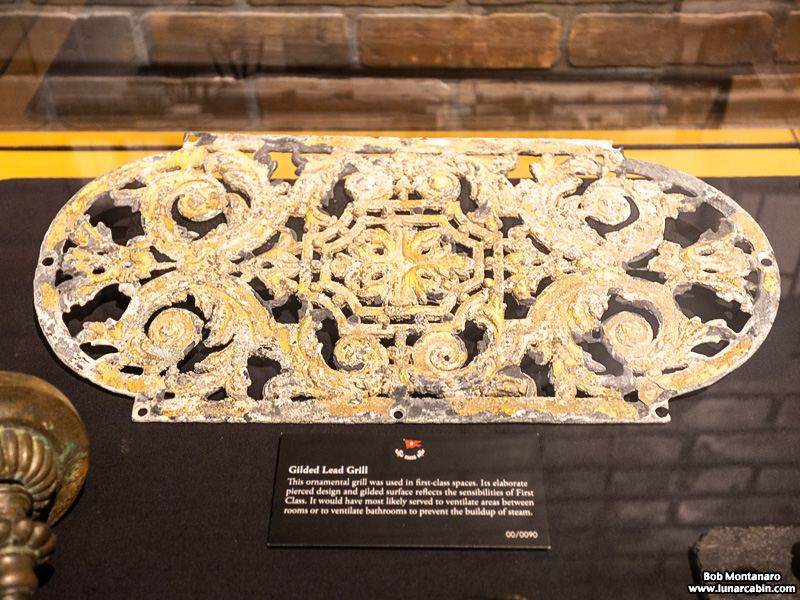
A gilded lead ventilation grill from First Class.

A Gimbal (Pendulum) Lamp that pivoted with the rolls of the ship so the light would stay upright.

The mooring bollard at left is a prop from James Cameron’s film Titanic.
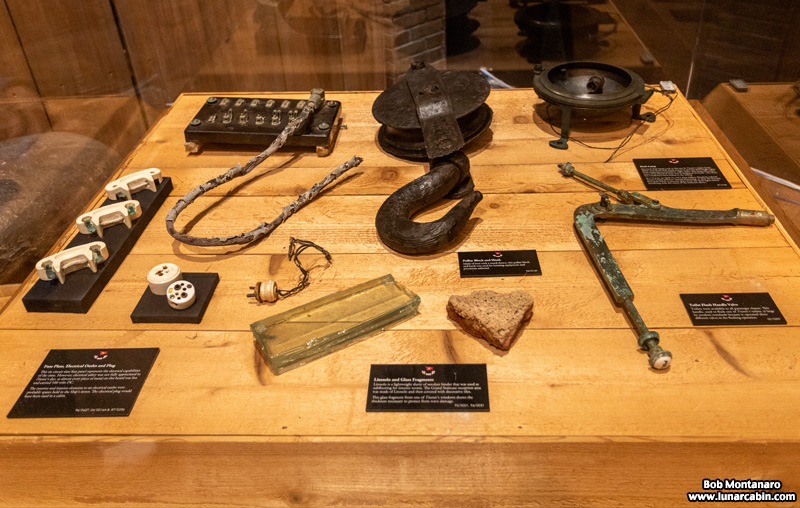
Various electrical and mechanical items retrieved from the wreck. Clockwise from the center top: pulley block & hook, deck lamp, toilet flush handle valve, litosolo used for the subflooring of interior rooms, a window glass fragment, electrical outlet, fuse plate, and electrical plug.

An Utley pivoting porthole frame. First class portholes could be opened and pivoted to catch the breeze and funnel it into the cabin.

Clockwise from top: fire extinguisher (of the period, not recovered from the wreck), wood decking from the RMS Olympic similar to what was used on Titanic, and recovered from the Titanic, coat hooks, engine wrench, swimming bath and bathroom tiles.

Second Class Luggage Tag
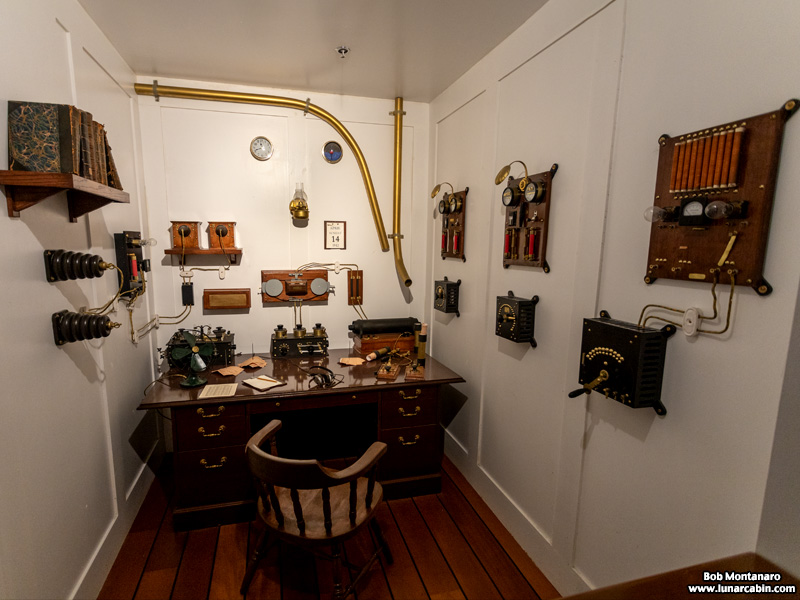
The Marconi Wireless Room, where the alarm was raised to other ships to assist Titanic and rescue the passengers and crew.
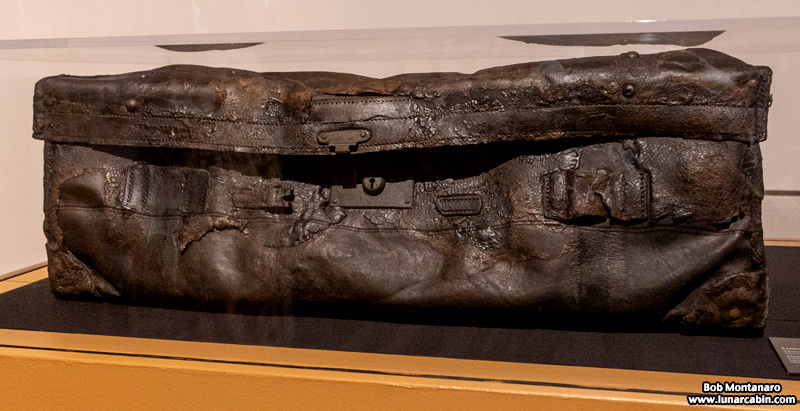
Leather luggage recovered from the wreck. Microorganisms in the deep ocean found the leather to be inedible due to the tanning process that ended up protecting the contents, especially paper and clothing.
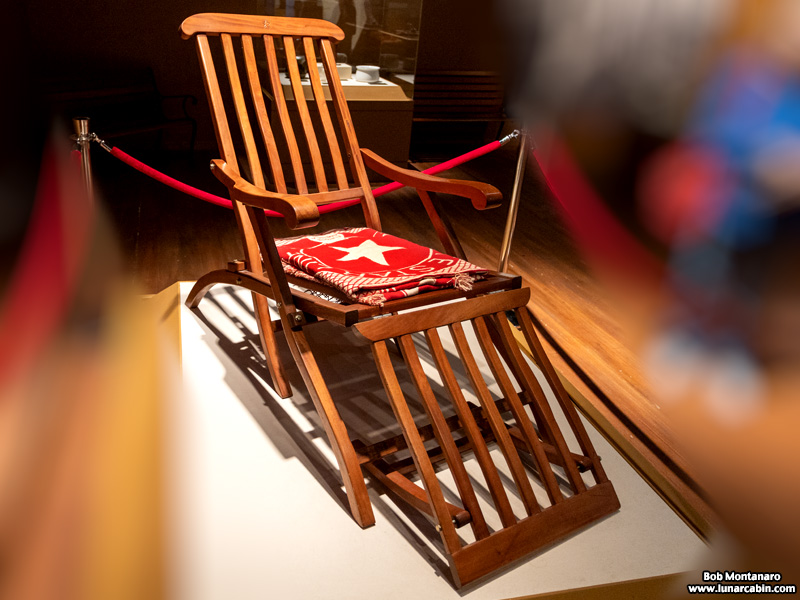
A prop deck chair from the movie Titanic by James Cameron.

Hot & cold water bath valves from a first class suite.
End of Part 1 of 3.
Categories: MultiScapes
 Range Tracking